10 Lucky Plants for Home as per Vastu (and How to Keep Them Healthy)
The plants Indian families traditionally keep for prosperity and positivity, where they are placed, and the practical care each one needs.
25 September 2026 4 min readBy the VaanMart nursery team
Many Indian homes keep certain plants for good luck, prosperity or positive energy, and Vastu Shastra gives traditional guidance on where to place them. Whether you follow Vastu closely or just like the idea, these plants have one more thing in common: most of them are easy to grow indoors.
Note: Vastu placement is a matter of tradition and belief. This guide shares common traditional recommendations alongside the practical care each plant needs to stay healthy.
1. Money plant (golden pothos)
The money plant is the most popular "lucky" plant in India, traditionally linked with wealth. It is commonly placed in the south-east corner of the living room.
Care: bright indirect light; water when the top inch of soil is dry; grows in water too. Trim long vines to keep it bushy. Also see variegated money plant and golden pothos.
2. Tulsi (holy basil)
Tulsi is sacred in most Hindu homes and is traditionally kept in the north, north-east or east, often in the courtyard or balcony.
Care: needs 4–6 hours of direct sun — it does not do well indoors. Water when the soil surface is dry, pinch flower spikes to keep leaves coming, and protect from frost on the coldest nights. Both Rama and Shyama (Krishna) tulsi are available.
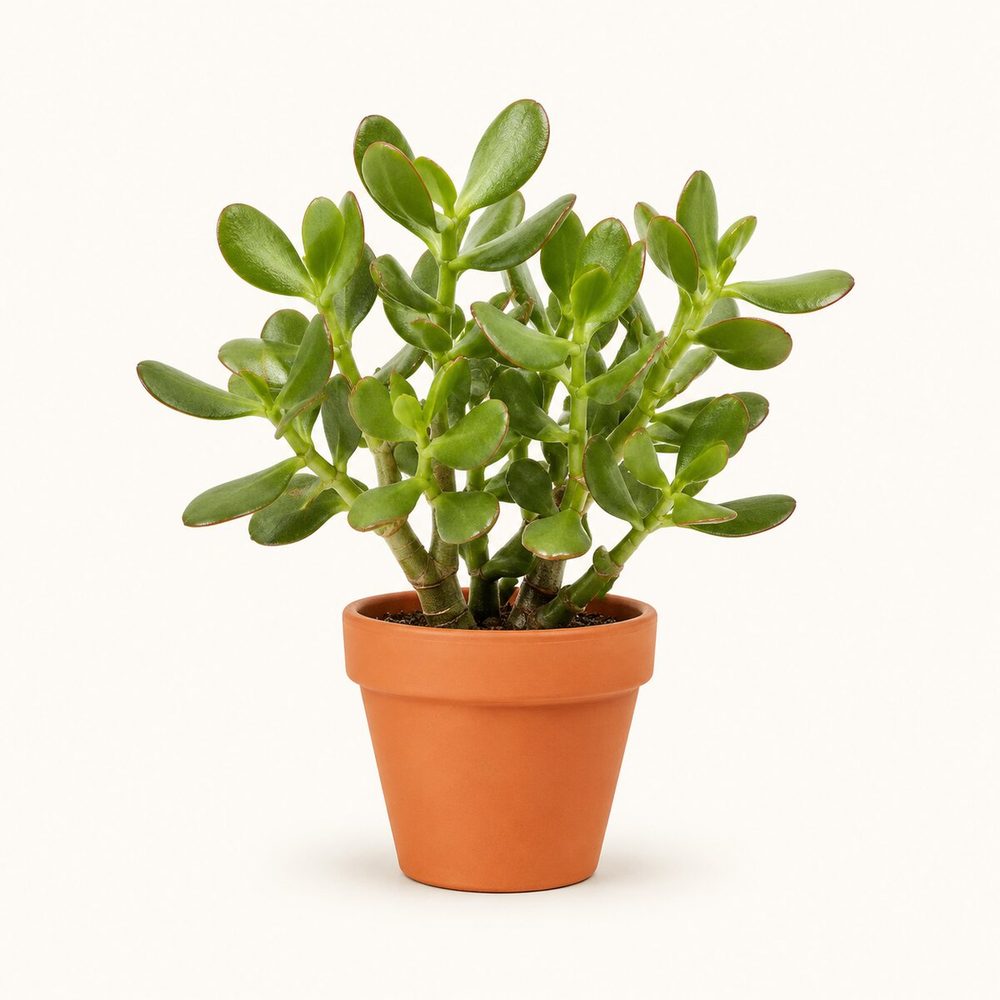
3. Jade plant
The jade plant has round, coin-like leaves and is traditionally associated with prosperity. It is often placed near the entrance or in the south-east.
Care: a succulent — give it bright light, some direct sun, and water only when the soil is completely dry. Overwatering is the main cause of jade plants dying.
4. Lucky bamboo
Lucky bamboo is commonly kept in the east or south-east, and the number of stalks is traditionally given meaning.
Care: grows in water — keep roots covered, change the water every 7–10 days, and keep it out of direct sun. Also available as 3-layer lucky bamboo.
5. Snake plant
The snake plant is often recommended for bedrooms and corners, and is considered protective in some traditions.
Care: tolerates low light and needs water only every 2–3 weeks. The golden hahnii variety is compact for desks.
6. Areca palm
The areca palm is popular for living rooms and is associated with a fresh, positive feel.
Care: bright indirect light, evenly moist (not wet) soil, and wiping dust from leaves.
7. Peace lily
The peace lily is associated with calm and harmony and is often placed in living rooms and bedrooms.
Care: medium to bright indirect light; it droops when thirsty and perks up within hours of watering.
8. Money tree (pachira)
The braided money tree is a popular gift for new homes and offices.
Care: bright indirect light and watering when the top few centimetres of soil are dry.
9. Rubber plant
The rubber plant, with its round glossy leaves, is traditionally linked with abundance and is often placed in the south-east.
Care: bright light, weekly watering in summer, less in winter.
10. Crassula and succulents
Small succulents are popular for desks and study tables.
Care: a sunny windowsill and very little water.
Plants traditionally avoided indoors
Traditional Vastu guidance often discourages keeping thorny plants such as cactus inside the home (they are usually kept outdoors), and any plant that is dry or dying. The practical lesson is the same: keep plants healthy, remove dead leaves, and do not leave dried plants in the house.
The practical rule: health comes first
A thriving plant in the "wrong" corner is better than a dying one in the "right" corner. Choose the position the plant needs for light first, then follow tradition where you can. If you are unsure, our plant care guides explain light and watering plant by plant, and a gardener visit in Greater Noida West can check your plants in person.
Frequently asked questions
Which plant is considered the luckiest for home?
The money plant and tulsi are the most widely kept for good luck in Indian homes, followed by jade and lucky bamboo.
Where should the money plant be kept as per Vastu?
The south-east direction of the living room is the traditional recommendation. It should still get bright indirect light to stay healthy.
Can tulsi be kept indoors?
Tulsi needs 4–6 hours of direct sun, so it grows best on a sunny balcony, terrace or window ledge rather than inside a room.
Which lucky plants need the least care?
Snake plant, lucky bamboo in water and ZZ plant need the least attention and survive irregular watering.